A typical screw manufacturing process
The following is a typical screw manufacturing process:
1. Material preparation: Selection of suitable metal materials, commonly carbon steel, stainless steel, copper, etc.. The material will be supplied in the form of bar or wire.
2. Cold Heading (Cold Forging): This is the process of forming a metal wire through a die in a cold state. The cold heading machine presses one end of the wire into the shape of a screw head, such as flat, round, countersunk etc. This process does not heat the metal but uses high pressure to change its shape.
3. Cutting: For some screws that require particularly precise dimensions or special thread forms, they may need to be cut by a lathe.
4. Thread rolling: The next step is to form the threads. For most standard screws, a thread rolling machine is used to roll the threads. In this process, two rollers with specific teeth are clamped onto the screw shaft and rotated to apply pressure, thereby extruding the desired threads.
5. Heat treatment: In order to improve the hardness and other mechanical properties of the screws, they are sometimes subjected to heat treatment, such as quenching and tempering.
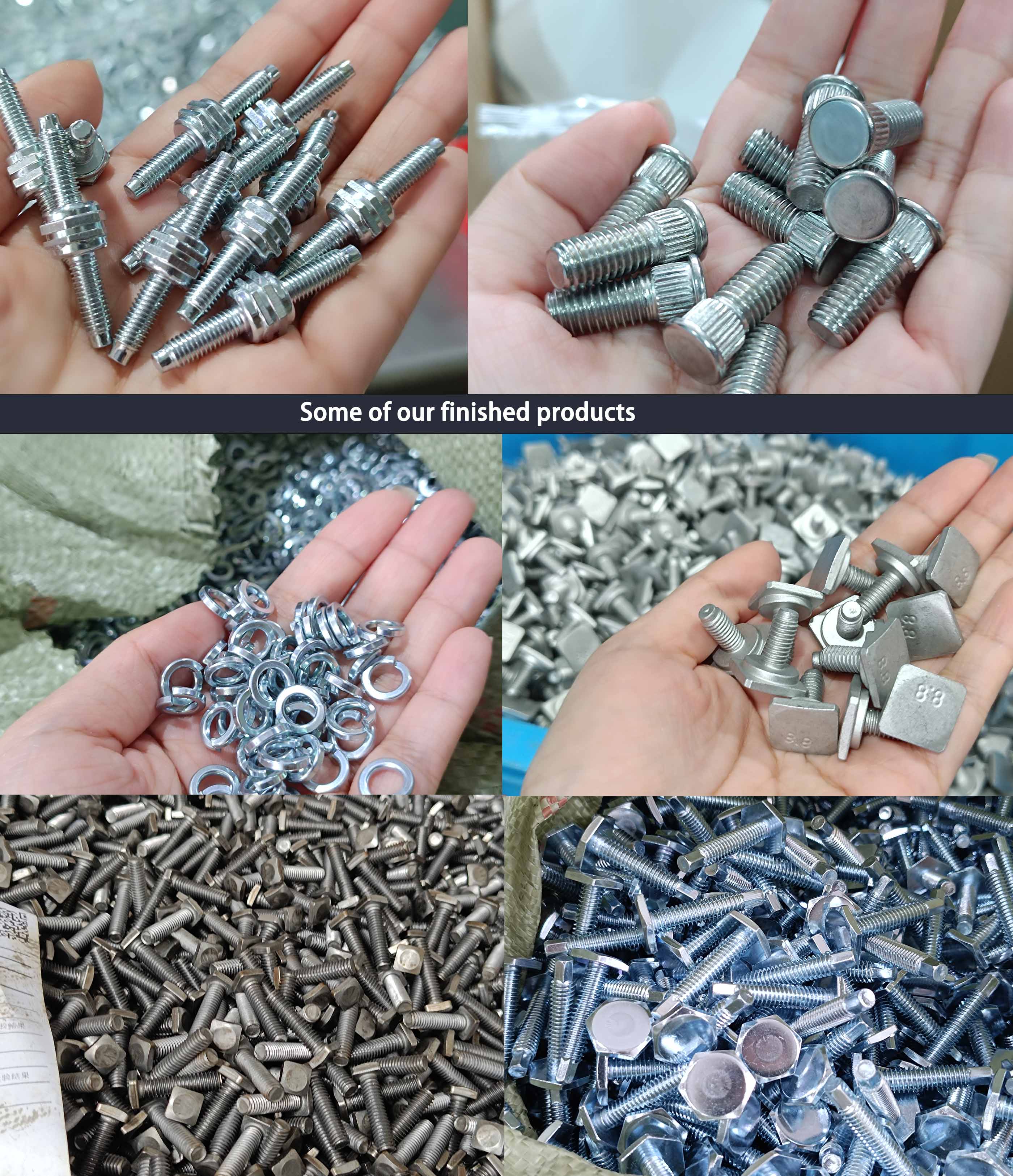
6. surface treatment: the final step is to treat the surface of the screw, which may be to prevent corrosion, aesthetic or increase wear resistance. Commonly used surface treatment methods include electroplating (such as zinc plating), chemical oxidation, painting and so on.
7. Inspection and Packaging: The finished screws are categorized and packaged according to specifications after strict quality inspection, and then ready to be shipped to customers.